
What a Technician Sees This Time of Year
By late October, the calls start coming in the same way every year: a door that worked fine all summer suddenly groans, jerks, or won't budge once the first hard frost hits. A homeowner tries the opener remote, hears the motor straining, and the door barely cracks open before stopping. Nine times out of ten, it's not one dramatic failure — it's a handful of small issues that summer heat hid and cold weather exposes all at once: a worn seal letting in drafts, a spring that's been losing tension for months, or rollers packed with dried-out grease and grit from a dusty summer. None of these are emergencies yet. Caught now, before the deep cold and road salt of a Cass County winter set in, they're simple fixes. Ignored, they turn into 6 a.m. calls when the door won't open and the driveway is covered in ice.
Check the Weatherstripping and Bottom Seal
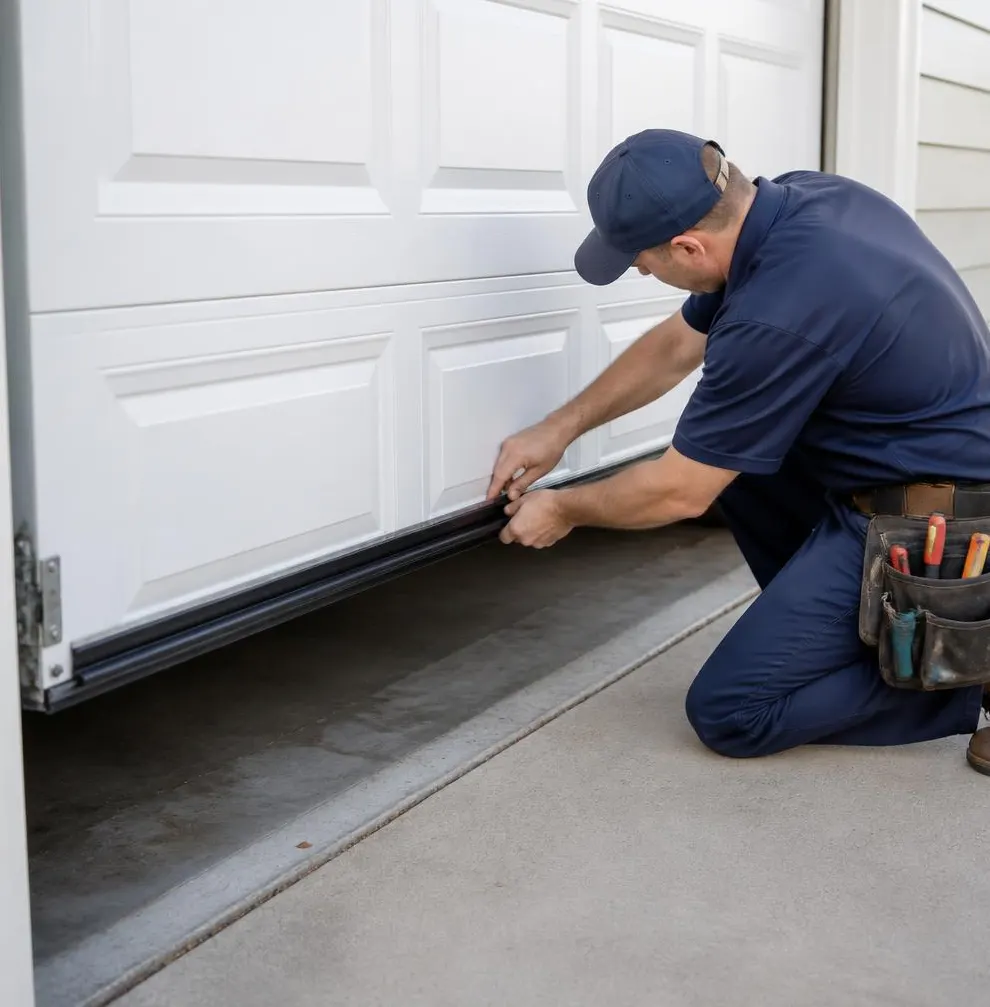
The rubber seal along the bottom of the door and the weatherstripping around the frame take a beating from UV exposure, heat, and general wear over a Michigan summer. By fall, it's common to find cracking, flattening, or gaps where the seal has pulled away from the door edge.
- Run a hand along the bottom seal — if it's hard, brittle, or torn, it won't flex properly once temperatures drop below freezing, and cold air (along with melting snow and mud from spring thaw runoff) will find its way in.
- Check the vinyl stops around the sides and top of the frame for gaps you can see daylight through.
- Replace worn seals before the first real cold snap. A new bottom seal is a low-cost fix that keeps the garage noticeably warmer and keeps meltwater from pooling and refreezing under the door.
Inspect Springs Before Cold Stresses Them
Garage door springs lose tension gradually, but cold weather accelerates the problem. Metal contracts in low temperatures, making springs stiffer and more prone to snapping — especially ones that were already stretched thin. If the door feels heavier than usual when lifted manually, or the opener strains and reverses partway through a cycle, that's a sign the springs are compensating for lost tension.
This is not a DIY repair. Garage door springs are under heavy tension and have caused serious injury to homeowners who've tried to adjust or replace them without the right tools. If you notice gaps in the coils, visible rust, or a door that slams down instead of lowering smoothly, it's time for a spring replacement before winter puts more strain on a weakened spring.
Give the Opener a Cold-Weather Check
Garage door openers work harder in cold temperatures. Lubricant inside the motor thickens, chain or belt drives tighten slightly as metal contracts, and battery backup units (if you have one) lose capacity in the cold — right when winter power outages from ice storms are most likely.
- Test the opener's manual release handle now, while it's easy to reach, so you know how to use it if the power goes out during a storm.
- If you have a battery backup, check that it still holds a charge; cold weather is exactly when you'll need it.
- Listen for grinding or hesitation during operation — these are early signs of a motor or gear issue that's easier to repair now than after it fails on a sub-zero morning.
Clean and Lubricate Tracks, Rollers, and Hinges
Summer dust, pollen, and grit build up in the tracks and on the rollers, and dried-out lubricant can't protect metal parts once road salt and slush start getting tracked into the garage. A build-up of old grease mixed with dirt actually attracts more grime and can cause rollers to stick or bind.
- Wipe down the tracks with a damp cloth to clear debris, then check for dents or misalignment.
- Apply a silicone-based garage door lubricant to rollers, hinges, and the opener's chain or screw drive — avoid WD-40 or heavy grease, which attracts dirt and gums up in cold temperatures.
- Check that rollers spin freely and aren't cracked or worn down, since cold makes brittle rollers more likely to fail outright.
Think About Insulation and the Garage Floor
If the garage is attached to the house or used as workspace, an uninsulated door lets a lot of cold air through, and during spring thaw, meltwater and mud tracked in from the driveway can pool near the door and freeze overnight, making the door harder to open. Clearing a path for drainage now, and checking that the door seals tightly against the floor, cuts down on ice forming right where the door needs to move.
When to Call Cassopolis Garage Door
If you've gone through this checklist and still have a door that's slow, noisy, uneven, or won't open fully, it's worth having it looked at before the first big snowfall rather than during one. Cassopolis Garage Door handles garage door maintenance visits that cover exactly this kind of pre-winter tune-up — lubrication, hardware tightening, track alignment, and a safety check on springs and cables. If a spring is already showing wear or has snapped, our spring replacement service gets it swapped out correctly and safely, with the right size and tension for your door. And if winter weather catches you off guard with a door that's frozen shut or stuck halfway, we offer emergency service for homeowners across Cassopolis, Dowagiac, Edwardsburg, Marcellus, Niles, Vandalia, Jones, and Union.
Don't wait for a frozen track or a snapped spring on the coldest morning of the year. Call Cassopolis Garage Door today to schedule a pre-winter check and keep your garage door working smoothly all season, right here in Cassopolis, MI.